
Kamakura in the rainy season is actually highly recommended.
Hydrangeas glistening in the rain, the calm atmosphere of temples and shrines, and quiet backstreets with fewer people than usual. The Hase and Sakanoshita area offers a different side of Kamakura from what you see on sunny days. With covered cafés and indoor cultural experiences nearby, you can spend a relaxing day here even while walking with an umbrella. That is one of the great strengths of this area.
In particular, Hase and Sakanoshita are centered around Enoden Hase Station, with Hasedera Temple, Goryo Shrine, the Great Buddha of Kamakura, Yuigahama Beach, and the cafés of Sakanoshita all within about a 10-minute walk. On rainy days, the burden of moving around can directly affect your travel experience, so having everything in a compact area is a major advantage. In this article, we introduce a model itinerary for enjoying Hase and Sakanoshita on a rainy day, along with useful tips to know before your visit.
Three Reasons Why Kamakura Is Surprisingly Recommended During the Rainy Season
The first reason is that this is the most beautiful season for hydrangeas.
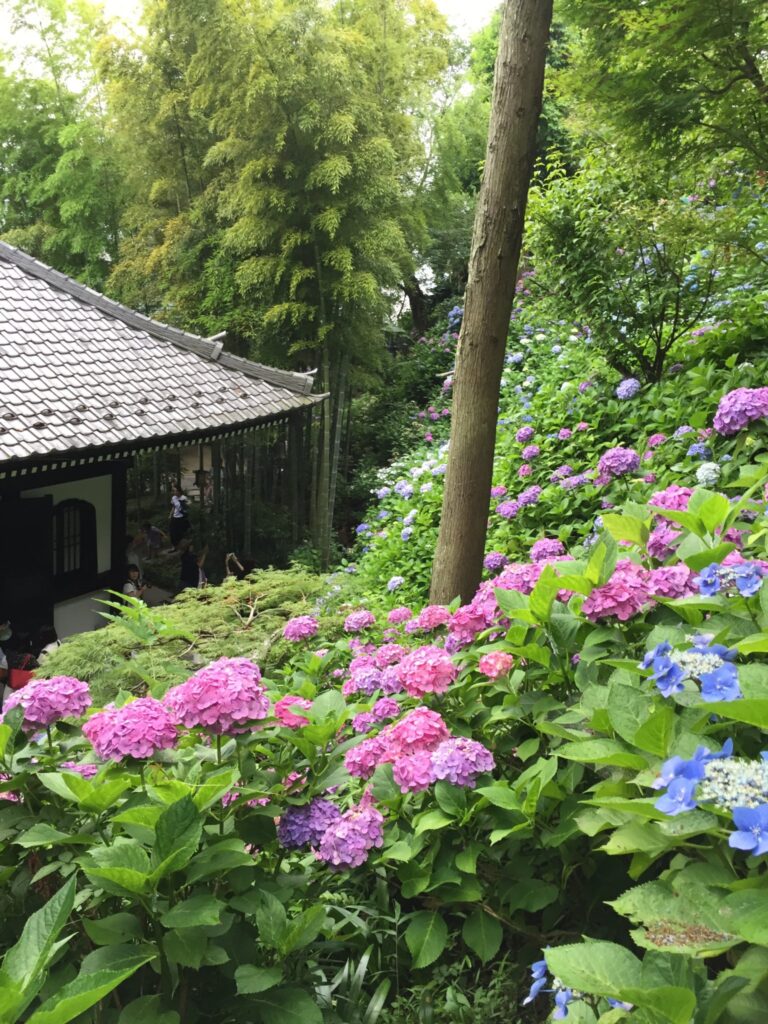
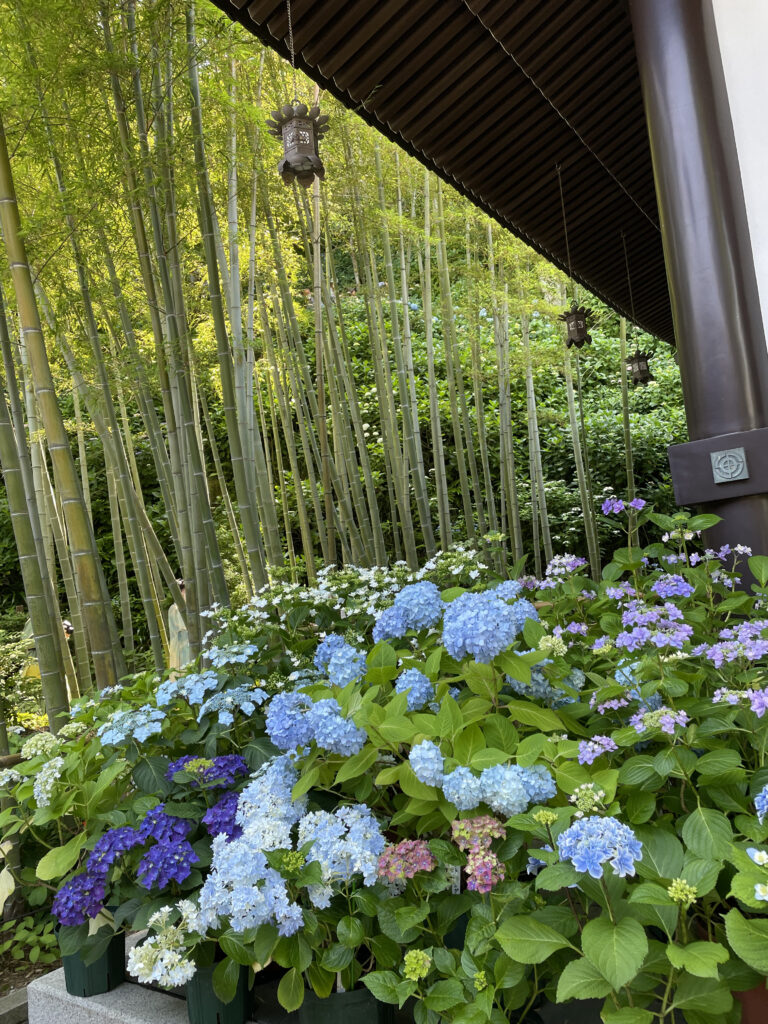
At Hasedera Temple, the hydrangea path is home to more than 2,500 hydrangeas of around 40 varieties, with the best viewing season usually from early to late June. Hydrangeas wet with rain often appear richer in color than they do on sunny days. The soft gradation of blue and purple flowers in the rain is a scene unique to Kamakura’s rainy season. Please note that during the peak hydrangea season, entrance to the hydrangea path may require a numbered viewing ticket. It is best to check the official Hasedera Temple website in advance for the day’s ticket information.
The second reason is that the flow of people becomes gentler.
On sunny holidays, Kamakura’s Komachi Street and the Enoden trains can become very crowded. On rainy days, however, especially in the morning or along the backstreets of Sakanoshita, you can enjoy a quieter and more atmospheric side of Kamakura. Hasedera Temple during hydrangea season can still be crowded, but many other places feel surprisingly calm.
The third reason is that it is easy to combine outdoor sightseeing with indoor spots.
In Hase and Sakanoshita, temples and shrines, seaside walking paths, old-house cafés, sutra copying, and Japanese confectionery-making experiences are all gathered within a compact area. You can walk a little, rest a little, and repeat the rhythm throughout the day, making it an ideal area for rainy-day sightseeing.
A One-Day Rainy Day Model Course in Hase and Sakanoshita
9:00 a.m. Enjoy Morning Hydrangeas at Hasedera Temple
On rainy days, it is best to start early. During the hydrangea season, Hasedera Temple becomes much busier after around 10:00 a.m., so visiting soon after opening allows you to enjoy the temple more peacefully. On weekends and during the peak bloom period, lines may form even before 9:00 a.m., so if you are staying nearby, it can be a good idea to visit before breakfast.
Hasedera Temple is known as the “Temple of Flowers,” where seasonal flowers can be enjoyed throughout the year. During the rainy season, the moss and trees in the temple grounds deepen in color, and the stone steps take on a soft, moist texture. Walking with an umbrella allows you to notice small details that you might miss on a sunny day. The view of Yuigahama Beach from the observation deck is also different on rainy days, with the sea and sky softly blending together.
For photography, try focusing not only on the hydrangea flowers themselves, but also on water droplets resting on the petals or the contrast between the flowers and the wet stone steps. Even with a smartphone, simply moving closer and focusing on the droplets can create a beautiful rainy-day photo.
◆Indoor Experience Tip: Sutra Copying and Buddhist Image Tracing at Hasedera Temple
One of the easiest indoor experiences to include on a rainy day is sutra copying or Buddhist image tracing at Hasedera Temple. Reception is open from 9:00 a.m. to 3:00 p.m., no reservation is required, and the offering fee is 1,200 yen per sheet. Copying the Enmei Jukku Kannon Sutra takes around 30 minutes, the Heart Sutra takes about 90 minutes, and Buddhist image tracing takes about two hours. From the temple’s writing room, you can look out over the garden while listening to the sound of rain, creating a quiet moment away from the bustle of sightseeing. You can also visit Hasedera in the morning and return in the afternoon just for sutra copying.
10:30 Visit Goryo Shrine for the View of the Enoden and Torii Gate
From Hasedera Temple, walk about seven minutes to Goryo Shrine in Sakanoshita.
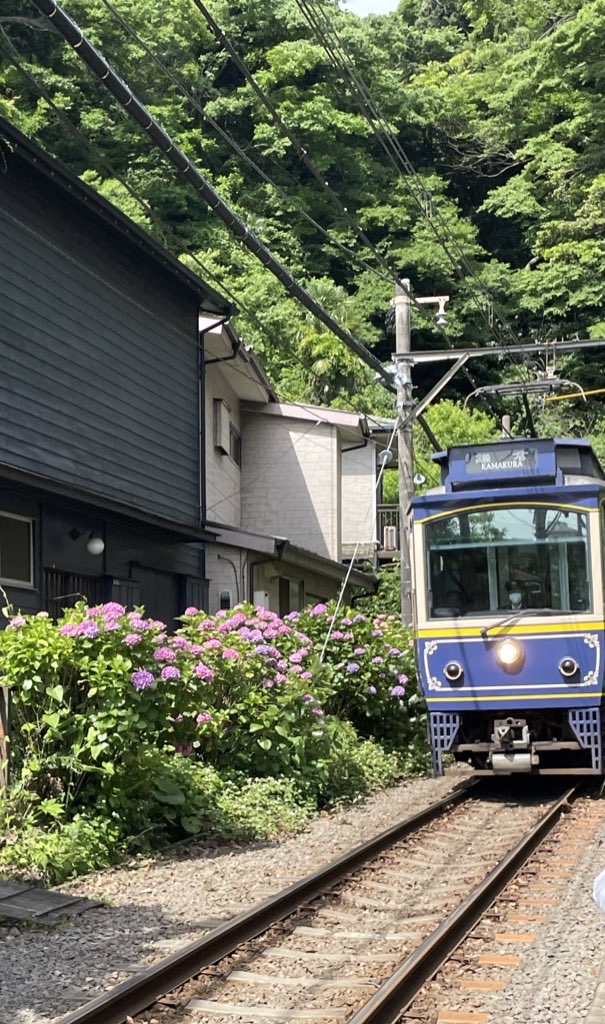
This shrine is famous for the scene of the Enoden train passing directly in front of the torii gate, making it a popular photo spot for capturing a very Kamakura-like view. On rainy days, the wet railway tracks and people walking with umbrellas create an atmosphere that feels almost like a scene from a film.
However, tripods and long periods of occupying photo spots near the tracks are prohibited. There are also signs within the shrine grounds regarding photography manners, so please follow the local rules and visit quietly and respectfully. The Enoden runs approximately every 12 minutes, so even if you miss one train, another will arrive soon. There is no need to rush. A recommended composition is to include yourself or your travel companion holding an umbrella together with the passing train.
11:30 Take a Break at a Café in Sakanoshita
When sightseeing on a rainy day, it is important not to keep walking too much.
The Sakanoshita and Hase area has several cafés set in renovated old houses or located near the sea. For example, ICEkitchen, an Asian café in Sakanoshita about one minute on foot from Hase Station, serves Asian food and sweets. Sacanosita, about four minutes on foot from Hase Station, is a quiet café tucked away in the backstreets of Sakanoshita.
When choosing a café on a rainy day, it is helpful to look for a place with enough seating and an atmosphere where you can relax without feeling rushed. Finding one place where you can think, “Let’s rest here a little longer if the rain gets stronger,” can make your whole itinerary feel more comfortable. Taking your time with a warm drink while listening to the sound of rain can greatly enhance the satisfaction of a rainy-season trip to Kamakura.
13:00 Take a Slow Walk Along the Enoden Line
If the rain begins to ease, try walking from Hase toward Gokurakuji along the Enoden line.
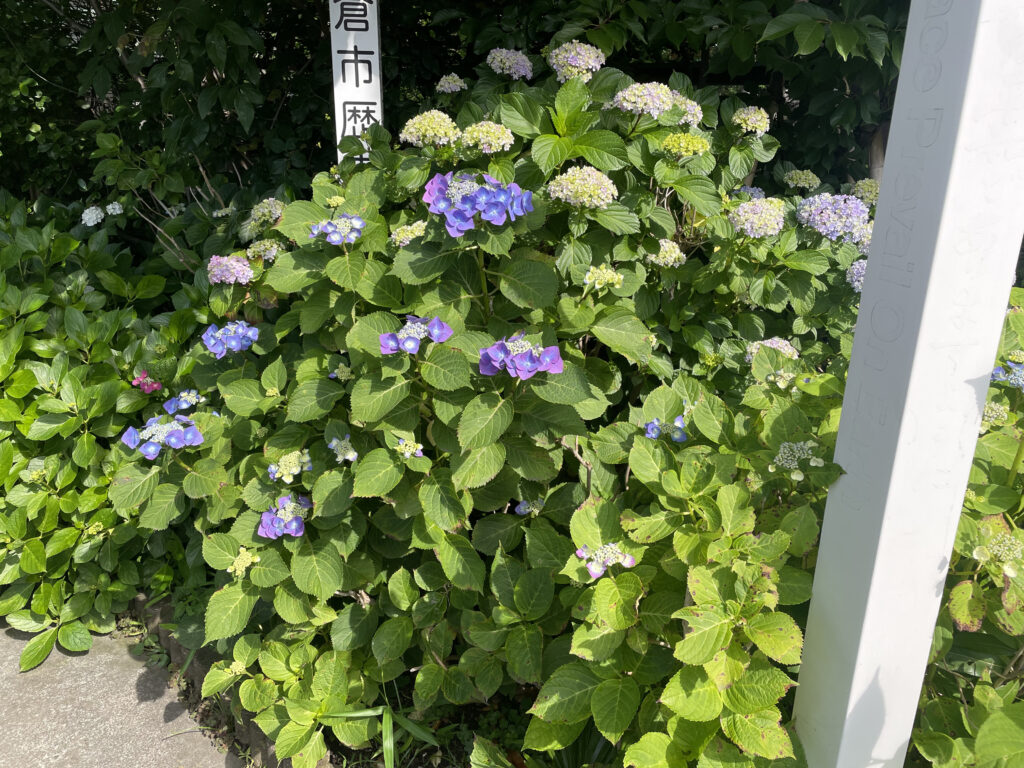
This route offers a completely different side of Kamakura from the busy Komachi Street area. Wet stone walls, flowers in front of houses, and the Enoden train running through a residential neighborhood all create a quiet, everyday scene. There may not be any flashy tourist attractions along the way, but these ordinary local views are, in many ways, the true charm of Hase and Sakanoshita.
Please note that there are slopes and stone steps in the area, and they can become slippery on rainy days. Comfortable, non-slip shoes are recommended.
15:00 Experience Japanese Culture Indoors
On rainy days, adding an indoor cultural experience can make your trip feel much richer. In the Hase, Sakanoshita, and central Kamakura areas, there are various options, from activities that can be joined on the day to those that require advance reservation.
◆Japanese Confectionery-Making at Kamakura Temari, Hase-Sakanoshita Classroom
Kamakura Temari, located about seven minutes on foot from Hase Station, offers hands-on classes where you can make three seasonal nerikiri, a traditional type of Japanese confectionery. The class takes about one hour, the fee is 3,500 yen excluding tax, and the design changes monthly. You can take the sweets home in a box, or enjoy them with matcha at the adjacent Saryo Temari in Sakanoshita. Advance reservation is required, so it is best to book through the official website once your travel schedule is decided.
◆Kamakura Rakuan, Hase-Sakanoshita
Kamakura Rakuan, located about three minutes on foot from Hase Station, also offers nerikiri Japanese confectionery-making experiences. The class takes about one hour and costs 3,000 yen excluding tax. You can also enjoy the sweets you make together with matcha. As with Kamakura Temari, advance reservation is required, so we recommend booking early once your itinerary is set.

◆Kamakura Area Tip: Enjoy Matcha Casually at Temple Tea Rooms
If you want to enjoy matcha without joining a full experience program, temple tea rooms are also a good option for a rainy-day break. At Kyukoan in the bamboo garden of Hokokuji Temple, you can enjoy matcha with a small dry sweet for 600 yen while looking out at the bamboo grove. Admission is charged separately, and matcha reception is open until 3:30 p.m. At Kisenan in Jomyoji Temple, you can enjoy matcha and seasonal fresh Japanese sweets while viewing a dry landscape garden for 1,100 yen. These places are a little farther from Hase, but they are worth including if you have time in the afternoon.
Compared with simply walking around, hands-on experiences and quiet cultural moments tend to remain strongly in your memory. They are also popular with international guests and families. On rainy days, your time spent walking outdoors may become shorter, but by adding time for experiences, the overall satisfaction of the trip can actually increase.
Three Preparation Tips for Rainy-Day Sightseeing in Kamakura
First, wear comfortable shoes. Kamakura has many slopes and stone steps, and they can become especially slippery in the rain. Sneakers or shoes with good grip are recommended.
Second, travel light. Since you will be moving around with an umbrella, it is more comfortable to leave large luggage at your accommodation or in a coin locker before starting your walk.
Third, do not pack your schedule too tightly. On rainy days, moving around takes more time. Choosing three or four places from Hasedera Temple, Goryo Shrine, a café, a walk, and an indoor experience is usually a good balance.
On Rainy Days, Staying Overnight in Kamakura Is the Best Choice
If you truly want to enjoy Kamakura during the rainy season, staying overnight is recommended rather than visiting as a day trip.
On a day trip, you are often limited to the crowded daytime hours. If you stay overnight, however, you can take an early morning walk around Hasedera when the streets are still empty, stroll from Sakanoshita to Yuigahama in the evening after the rain stops, or spend the heavier rain hours reading a book at a café or at your accommodation. This allows you to travel without being controlled too much by the weather.
The rainy season is also a time when the weather does not always follow the forecast. It may rain heavily in the morning, stop in the afternoon, and become brighter toward the evening. On a day trip, it is easy to miss these perfect moments. If you stay overnight, you can step outside as soon as the rain softens. Walking through Sakanoshita at dusk with an umbrella in hand offers a quietness that you cannot experience on a sunny day in Kamakura.
A Quiet Rainy-Season Trip in Hase and Sakanoshita
Kamakura during the rainy season has a calmness and depth that sunny days do not offer. Hydrangeas wet with rain, quiet backstreets, the sound of the Enoden, time spent in cafés, and moments of making sweets or copying sutras by hand. Each of these reveals the true character of Kamakura.
Instead of thinking, “It’s raining, what a shame,” try discovering Kamakura that can be enjoyed because it is raining.
This rainy season, take your time and walk through Hase and Sakanoshita.
Please note: Fees and opening hours for experience facilities may change. Please check each facility’s official website for the latest information.